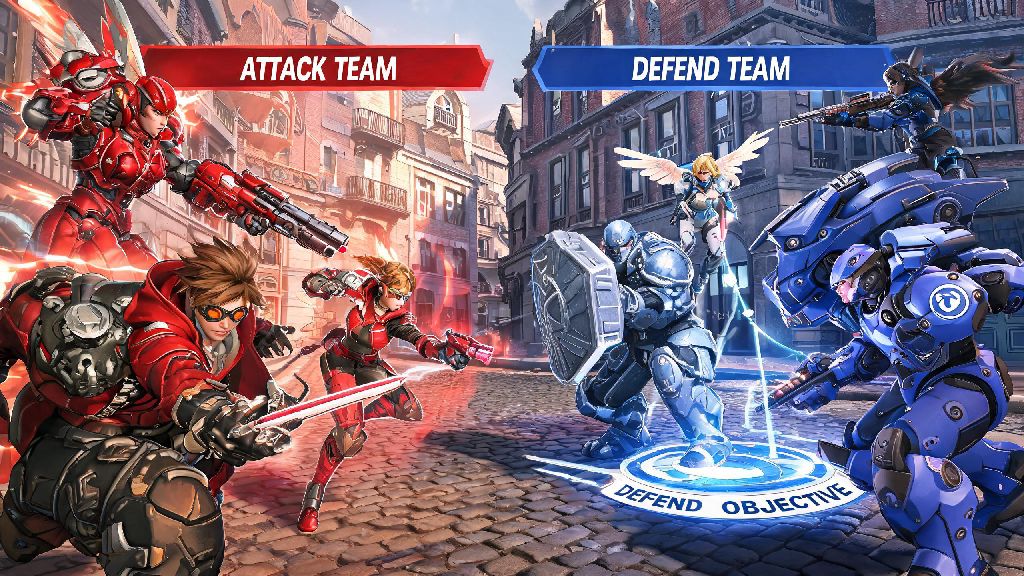
If you’ve ever screamed into your headset after getting rolled by a team of smurfs while your own teammates can’t hit a single basic attack, you’ve almost certainly asked why is Overwatch 2 matchmaking so unbalanced. I’ve been there too: last month I went on a 4-game win streak in gold ranked, only to get paired against two Masters-tier DPS players in my next match who wiped my team in under 5 minutes. It’s not just bad luck, there are actual, documented reasons behind the lopsided matches so many players deal with every week. This guide breaks down those causes and gives you real tips to get more fair matches in both casual and ranked queues.
Hidden MMR and skill rating mismatches are the biggest culprit
Most players only pay attention to their visible Skill Rating (SR) that moves up or down after every match, but the matchmaker relies almost entirely on a hidden Matchmaking Rating (MMR) to build lobbies. Your MMR tracks your actual in-game performance, not just your win/loss ratio, so it can shift much faster than your visible SR. That means if you play exceptionally well for a few matches, your MMR can jump to a higher rank tier before your SR catches up, leading to you being paired against much more skilled players while your visible rank still says you belong in a lower tier.
Performance-based SR adjustments make this gap even worse, especially in lower ranks. If you carry a bunch of matches as a support main, the matchmaker will assume you’re capable of playing against higher-ranked players, even if your SR is still 500 points below that tier. Returning players also face this issue: if you haven’t played in 6 months, your MMR is still stuck at your old rank, so you’ll either get thrown into lobbies way too hard for your current skill level, or you’ll roll a bunch of new players who never stood a chance against you.
Why is Overwatch 2 matchmaking so unbalanced for role queue vs open queue?
The type of queue you pick plays a huge role in how balanced your matches will be, and role queue is almost always more prone to lopsided lobbies than open queue. That’s because role queue splits the player pool into three separate groups: tank, damage, and support. At any given time, there are far more damage players queuing than tank or support, so the matchmaker has to pull from much wider SR ranges to fill out the tank and support slots for both teams. If it can’t find players within a tight SR range in under 10 seconds, it automatically widens the allowed range to keep queue times short.
There are a few specific factors that make this player pool gap even worse for balance:
Off-peak queue times are the worst for this issue. I’ve queued for tank at 2am on a weekday before, and got placed in a lobby with a Bronze 1 support on my team and a Grandmaster damage player on the enemy team. The matchmaker simply didn’t have enough players available to build a fair lobby, so it prioritized getting me into a game quickly over balance. Open queue lobbies avoid this issue for the most part, since they don’t split the player pool by role, so the matchmaker has far more players to choose from to build balanced teams.
Team composition and player behavior break match balance even with equal SR
Even if the matchmaker builds a lobby where both teams have the exact same average SR and MMR, the match can still feel completely unbalanced for a number of reasons that have nothing to do with the matchmaker’s math. The biggest one is team composition: the matchmaker doesn’t track what heroes players main, so it can easily put 4 damage one-tricks on the same team with no one willing to play support or tank. Even if all 5 players on your team are the same rank as the enemy, you’re going to lose 9 times out of 10 if you have no healers or frontline.
Hero counter picks also matter far more than raw SR in many matches. If the enemy team has a dedicated Widowmaker one-trick who’s top 100 on that hero, and your team has no hitscan players or dive tanks to counter them, you’re going to get spawn camped before the match even really starts. Throwers, leavers, and tilted players also throw off balance completely: if your tank leaves 2 minutes into the match because someone picked their main hero, you’re stuck playing 4v5 with almost no chance of winning, even if the teams were perfectly balanced at the start.
Actionable fixes to get more balanced Overwatch 2 matches
You can’t fix the matchmaker on your own, but there are small changes you can make to your queue habits that will drastically reduce how many unbalanced lobbies you end up in. First, always try to queue during peak play times for your region, which are usually 7pm to 11pm local time on weekdays and all day on weekends. These times have the biggest player pool, so the matchmaker doesn’t have to widen the SR range to fill lobbies.
Turning on cross-play is another easy fix, especially if you play on console. Expanding your player pool to include both console and PC players gives the matchmaker far more options to build balanced lobbies, and you can always turn off PC cross-play if you don’t want to play against mouse and keyboard users. If you play solo, try queuing for at least two roles instead of just one: you’ll get shorter queue times and the matchmaker will be able to place you in lobbies with tighter SR ranges. Grouping up with 1 or 2 friends who are around your skill level also helps, since the matchmaker prioritizes pairing grouped teams against other grouped teams instead of random solo players who may not work well together.
If you end up on a loss streak of 3 or more matches, take a 15 minute break before queuing again. The matchmaker doesn’t punish you for loss streaks, but tilted play makes you perform far worse than you normally would, leading to even more lopsided matches. Stepping away to get a drink or stretch will help you reset and play better when you come back.
At the end of the day, lopsided lobbies are an unavoidable part of any online team game, and there are clear, concrete answers to why is Overwatch 2 matchmaking so unbalanced. The matchmaker has to balance short queue times, small player pools, and hidden skill ratings all at once, so it’s never going to be 100% perfect. But by adjusting when you queue, who you queue with, and what roles you play, you can cut down on the number of frustrating, unbalanced matches you have to sit through every week. Blizzard is still tweaking the matchmaker regularly, so we’ll likely see even more improvements to balance in the coming months.